Effective supply chain management is crucial for any business aiming for profitability and growth. The complexities of global sourcing, manufacturing, and distribution demand sophisticated tools to optimize processes and minimize disruptions. Supply chain planning software offers a powerful solution, providing businesses with the visibility and control needed to navigate these challenges. From forecasting demand to managing inventory and optimizing logistics, these advanced systems are transforming how companies manage their supply chains.
This exploration delves into the core functionalities, benefits, and future trends of supply chain planning software. We’ll examine various software types, integration capabilities, and crucial considerations for selection and implementation. Understanding this technology is essential for businesses striving for efficiency, resilience, and a competitive edge in today’s dynamic market.
Key Features of Supply Chain Planning Software
Supply chain planning software offers a suite of tools designed to optimize the flow of goods and services from origin to consumption. Effective software streamlines processes, reduces costs, and improves overall efficiency across the entire supply chain. This optimization is achieved through integrated modules that work together to provide a holistic view and control of the supply chain.
Essential Modules in Supply Chain Planning Software
Most robust supply chain planning software incorporates several key modules. These modules are interconnected and rely on data exchange to provide a comprehensive planning and execution capability. The specific features within each module can vary depending on the vendor and the specific needs of the organization. However, the core functionalities remain relatively consistent across leading platforms.
- Demand Planning: This module forecasts future demand based on historical data, market trends, and other relevant factors. Accurate demand forecasting is crucial for effective inventory management and production planning.
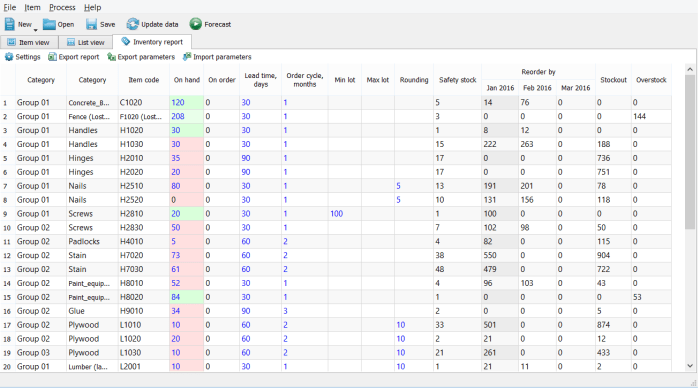
- Inventory Management: This module helps manage inventory levels across the entire supply chain, minimizing holding costs while ensuring sufficient stock to meet demand. It often incorporates features for safety stock calculation and optimal reorder point determination.
- Production Planning: This module optimizes production schedules to meet forecasted demand while considering capacity constraints and resource availability. This includes features for production scheduling, capacity planning, and materials requirement planning (MRP).
- Transportation Management: This module optimizes transportation routes and modes to minimize costs and delivery times. It typically includes features for route optimization, carrier selection, and shipment tracking.
- Supply Chain Collaboration: This module facilitates communication and collaboration between different stakeholders in the supply chain, such as suppliers, manufacturers, distributors, and retailers. This often involves data sharing and real-time visibility across the network.
Typical Workflow within Supply Chain Planning Software
A typical workflow within supply chain planning software involves a cyclical process of planning, execution, and monitoring. The following flowchart illustrates this process:[Imagine a flowchart here. The flowchart would begin with “Demand Forecasting,” flowing into “Inventory Planning,” then to “Production Planning,” followed by “Transportation Planning,” and finally to “Order Fulfillment.” Feedback loops would connect “Order Fulfillment” back to “Demand Forecasting” and “Inventory Planning” to reflect the iterative nature of supply chain management.
Data analysis and reporting would be integrated throughout the process.]
Categorization of Features by Function
The features of supply chain planning software can be categorized by their primary function to better understand their individual contributions to overall optimization.
- Demand Planning: Sales forecasting, trend analysis, seasonality modeling, promotional impact analysis.
- Inventory Management: Inventory optimization, safety stock management, reorder point calculation, warehouse management, inventory tracking.
- Production Planning: Production scheduling, capacity planning, materials requirement planning (MRP), resource allocation, production simulation.
- Transportation Optimization: Route optimization, carrier selection, shipment tracking, cost analysis, delivery scheduling.
- Supply Chain Visibility & Collaboration: Real-time tracking, data sharing, exception management, performance dashboards, collaborative planning.
Contribution of Features to Supply Chain Optimization
Each feature contributes significantly to the overall optimization of the supply chain. For example, accurate demand forecasting (demand planning) prevents overstocking or stockouts, reducing inventory holding costs and lost sales. Efficient production planning ensures timely delivery and minimizes production bottlenecks. Effective transportation management reduces transportation costs and improves delivery times. Finally, robust supply chain visibility and collaboration foster better communication and coordination across the entire network, enhancing overall efficiency and responsiveness.
The integration of these features allows for a holistic approach to supply chain management, leading to significant improvements in efficiency, cost reduction, and customer satisfaction.
Integration with Other Systems
Effective supply chain planning requires a holistic view of the entire operation. This is only achievable through seamless integration with other crucial business systems. Modern supply chain planning software facilitates this connectivity, enabling data sharing and process automation across various platforms, ultimately improving efficiency and decision-making.Supply chain planning software leverages APIs and other integration technologies to connect with various systems, creating a unified view of inventory, demand, and production.
This interconnectedness minimizes data silos and enables real-time visibility across the entire supply chain, from raw material sourcing to final product delivery. The key integrations often involve ERP and WMS systems, but the potential extends to transportation management systems (TMS), customer relationship management (CRM) systems, and even specialized forecasting tools.
ERP System Integration
Integrating supply chain planning software with an Enterprise Resource Planning (ERP) system is crucial for a unified view of business operations. The ERP system acts as a central repository for various business functions, including finance, human resources, and manufacturing. Connecting the supply chain planning software with the ERP system allows for a seamless flow of information regarding sales orders, inventory levels, production schedules, and financial data.
This integrated approach eliminates manual data entry, reduces errors, and enables more accurate forecasting and planning. For example, sales data from the ERP system can automatically update demand forecasts within the supply chain planning software, triggering adjustments to production plans and inventory levels.
Warehouse Management System (WMS) Integration
Integration with a Warehouse Management System (WMS) is equally vital for optimizing warehouse operations and ensuring accurate inventory tracking. The WMS provides real-time visibility into warehouse activities, including inventory levels, location, and movement. Integrating the supply chain planning software with the WMS allows for accurate inventory data to inform demand planning and production scheduling. Conversely, production schedules from the supply chain planning software can be automatically transmitted to the WMS, optimizing warehouse operations for efficient order fulfillment.
This integration reduces discrepancies between planned and actual inventory levels, minimizing stockouts and overstocking. For instance, a planned shipment of goods from the supply chain planning software can trigger a corresponding picking and packing process within the WMS, ensuring timely order fulfillment.
Seamless Data Flow Between Systems
The importance of seamless data flow between different systems cannot be overstated. A fragmented system, with data residing in isolated silos, leads to inaccurate forecasting, inefficient planning, and increased operational costs. Seamless data flow ensures that all systems operate with the same, up-to-date information, allowing for informed decision-making at all levels of the supply chain. Real-time data exchange eliminates delays and minimizes the risk of errors caused by manual data entry or outdated information.
This results in improved responsiveness to market changes, reduced lead times, and enhanced customer satisfaction.
Comparison of Integration Capabilities
Different supply chain planning software providers offer varying levels of integration capabilities. Some providers offer pre-built integrations with popular ERP and WMS systems, simplifying the implementation process. Others may require custom integration solutions, which can be more time-consuming and expensive. Factors to consider when comparing integration capabilities include the breadth of supported systems, the ease of integration, and the level of technical support provided by the vendor.
Evaluating these factors ensures that the chosen software seamlessly integrates with existing systems, maximizing the benefits of a unified supply chain. For example, some providers might offer robust APIs and extensive documentation, simplifying the integration process for users with in-house IT capabilities, while others may offer managed services to handle the integration process.
Supply Chain Considerations (Independent of Software)
Effective supply chain management is crucial for business success, but it presents significant challenges, especially in today’s interconnected global economy. Even the most sophisticated software cannot completely mitigate inherent risks and complexities. Understanding these challenges and implementing robust strategies are paramount.Global supply chains are inherently intricate networks involving multiple suppliers, manufacturers, distributors, and customers across various geographical locations. This complexity introduces numerous points of potential failure and requires meticulous coordination and visibility to ensure efficient operations.
Challenges of Managing Global Supply Chains
Managing global supply chains presents numerous difficulties. These include navigating diverse regulatory environments, managing currency fluctuations, overcoming communication barriers across different languages and cultures, and coordinating logistics across vast distances. Time zone differences can also complicate real-time collaboration and decision-making. Furthermore, the sheer volume of data involved in tracking goods and managing relationships across a global network can be overwhelming without effective technology and processes.
Consider the example of a company sourcing raw materials from Asia, manufacturing in Europe, and distributing to North America. Each stage presents unique challenges, requiring careful planning and execution.
Impact of Disruptions on Supply Chains
Supply chain disruptions, whether caused by natural disasters (e.g., earthquakes, hurricanes), geopolitical events (e.g., wars, trade disputes), or pandemics (e.g., COVID-19), can have devastating consequences. These events can lead to production delays, shortages of raw materials, transportation bottlenecks, and significant financial losses. The 2011 Tohoku earthquake and tsunami in Japan, for instance, severely disrupted the global supply of automotive parts, highlighting the interconnectedness and fragility of global supply chains.
Such disruptions underscore the need for robust risk management strategies and contingency planning.
Key Performance Indicators (KPIs) for Supply Chain Effectiveness
Several KPIs are used to measure the effectiveness of a supply chain. These metrics provide insights into various aspects of performance, allowing for continuous improvement. Common KPIs include:
- On-time delivery rate: The percentage of orders delivered on or before the scheduled delivery date.
- Inventory turnover rate: The number of times inventory is sold or used in a given period.
- Lead time: The time it takes to fulfill an order from the moment it’s placed to when it’s delivered.
- Order fulfillment cycle time: The total time it takes to process and fulfill an order.
- Customer order cycle time: The time it takes from order placement to customer receipt.
- Perfect order rate: The percentage of orders that are delivered on time, complete, and without errors.
- Supply chain cost: The total cost associated with managing the supply chain.
Best Practices for Building a Resilient and Agile Supply Chain
Building a resilient and agile supply chain requires a proactive approach that incorporates various best practices. This involves anticipating potential disruptions, diversifying sourcing strategies, and building strong relationships with suppliers.
- Diversify Sourcing: Reduce reliance on single suppliers by establishing multiple sourcing options to mitigate risks associated with supplier disruptions.
- Develop Strong Supplier Relationships: Foster collaboration and transparency with suppliers to improve communication and coordination.
- Implement Robust Risk Management Processes: Identify and assess potential risks, develop contingency plans, and regularly review and update these plans.
- Invest in Technology: Leverage supply chain planning software and other technologies to enhance visibility, improve decision-making, and streamline operations.
- Build Inventory Buffer Stock: Maintain appropriate levels of safety stock to cushion against unexpected demand fluctuations or supply disruptions.
- Embrace Agility and Flexibility: Design supply chain processes that can quickly adapt to changing market conditions and unforeseen events.
- Improve Forecasting Accuracy: Utilize advanced forecasting techniques to better predict demand and optimize inventory levels.
Selecting and Implementing Supply Chain Planning Software
Choosing the right supply chain planning software is a crucial decision impacting operational efficiency, cost optimization, and overall business success. A well-structured selection process ensures the chosen software aligns with your specific needs and integrates seamlessly into your existing infrastructure. This section Artikels a step-by-step guide to navigate this process effectively.
Step-by-Step Guide for Software Selection
Selecting the appropriate supply chain planning software involves a methodical approach. First, define your requirements clearly, considering factors like current and future needs, budget constraints, and integration capabilities. Then, research potential vendors and their offerings, evaluating features, pricing, and customer support. Finally, conduct thorough testing and pilot programs before full-scale implementation.
- Define Requirements: Begin by identifying your organization’s specific needs. What challenges are you hoping to solve with the software? Do you need features for demand planning, inventory optimization, transportation management, or something else? Consider scalability and potential future growth.
- Research Vendors: Research vendors offering solutions that align with your defined requirements. Consider factors such as market reputation, industry experience, and client testimonials. Request demos and presentations to gain a comprehensive understanding of each vendor’s offerings.
- Evaluate Features and Pricing: Carefully compare the features and pricing models of different software solutions. Ensure the software integrates seamlessly with your existing systems (ERP, CRM, etc.). Analyze the total cost of ownership, including implementation, training, and ongoing maintenance costs.
- Conduct Proof-of-Concept (POC): Before committing to a particular vendor, conduct a POC to assess the software’s performance in your specific environment. This involves testing the software with real-world data and processes to evaluate its usability and effectiveness.
- Implement and Integrate: Once you’ve selected a vendor, work closely with their team to implement the software and integrate it with your existing systems. Provide comprehensive training to your staff to ensure they can effectively use the new software.
Factors to Consider When Choosing a Vendor
Vendor selection goes beyond just software features. Consider the vendor’s financial stability, their track record of successful implementations, and the level of support they provide. A reputable vendor with a strong support system will minimize disruptions and ensure a smooth transition.
- Financial Stability: Choose a vendor with a proven track record of financial stability to mitigate the risk of future disruptions or lack of support.
- Implementation Experience: Assess the vendor’s experience in implementing similar solutions in companies of comparable size and complexity to yours.
- Customer Support: Evaluate the vendor’s customer support capabilities, including response times, availability of documentation, and training opportunities.
- Scalability and Flexibility: Ensure the software can adapt to your future needs and accommodate potential growth.
- Security and Compliance: Verify that the software meets your organization’s security and compliance requirements.
Checklist for Evaluating Software Solutions
A comprehensive checklist ensures a thorough evaluation of each software solution. This checklist should cover functionality, integration, scalability, support, and pricing.
- Functionality: Does the software offer all the features you need? Does it support your specific supply chain processes?
- Integration: Can the software integrate seamlessly with your existing systems (ERP, CRM, WMS)?
- Scalability: Can the software handle your current and future volume of data and transactions?
- Usability: Is the software user-friendly and easy to navigate?
- Support: Does the vendor offer adequate support and training?
- Pricing: Is the pricing model transparent and affordable?
- Security: Does the software meet your security requirements?
Comparison Table of Different Software Vendors
The following table provides a sample comparison of different supply chain planning software vendors. Note that pricing and features can vary based on specific needs and configurations.
| Vendor | Key Features | Pricing Model | Customer Reviews |
|---|---|---|---|
| Vendor A | Demand planning, inventory optimization, transportation management | Subscription-based | Generally positive, some concerns about user interface |
| Vendor B | Demand forecasting, supply chain visibility, warehouse management | Per-user licensing | High ratings for customer support, some complaints about implementation complexity |
| Vendor C | Integrated planning, advanced analytics, risk management | Project-based pricing | Mixed reviews, strong features but steep learning curve |
| Vendor D | Supply chain design, optimization, simulation | Subscription-based with tiered pricing | Positive reviews for powerful analytics and ease of use |
Future Trends in Supply Chain Planning Software
The field of supply chain planning software is rapidly evolving, driven by advancements in technology and the increasing complexity of global supply chains. Businesses are constantly seeking ways to improve efficiency, visibility, and resilience, leading to the adoption of innovative solutions that leverage the power of data and automation. This section explores several key future trends shaping the landscape of supply chain planning software.
The Role of Artificial Intelligence and Machine Learning in Supply Chain Planning
AI and ML are transforming supply chain planning by enabling predictive analytics, automated decision-making, and improved optimization. Machine learning algorithms can analyze vast datasets to identify patterns and predict future demand, allowing businesses to proactively adjust their inventory levels and production schedules. AI-powered systems can also optimize transportation routes, warehouse layouts, and resource allocation, leading to significant cost savings and efficiency gains.
For example, a retailer using AI-powered demand forecasting might accurately predict a surge in demand for a specific product during a holiday season, enabling them to avoid stockouts and lost sales. Similarly, a manufacturer could leverage AI to optimize its production schedule, minimizing waste and maximizing output.
The Increasing Importance of Data Analytics in Supply Chain Planning
Data analytics plays a crucial role in providing actionable insights for improved supply chain decision-making. By analyzing data from various sources, such as sales, inventory, and logistics, businesses can gain a comprehensive understanding of their supply chain performance. This data-driven approach allows for better identification of bottlenecks, inefficiencies, and potential risks. Advanced analytics techniques, such as predictive modeling and simulation, can help businesses anticipate disruptions and develop contingency plans.
A company might use data analytics to identify a supplier with consistently late deliveries, allowing them to proactively seek alternative suppliers or renegotiate contracts.
The Adoption of Blockchain Technology in Supply Chain Management
Blockchain technology offers the potential to enhance transparency, traceability, and security within supply chains. By recording all transactions on a secure, immutable ledger, blockchain can improve the accuracy and reliability of supply chain data. This increased transparency can help businesses build trust with their partners and customers, while also reducing the risk of fraud and counterfeiting. For instance, a food producer could use blockchain to track the origin and journey of its products, providing consumers with detailed information about their food’s provenance.
This increased transparency builds consumer confidence and strengthens brand reputation.
Automation Transforming Supply Chain Planning Processes
Automation is streamlining and optimizing various aspects of supply chain planning. Robotic process automation (RPA) can automate repetitive tasks, such as data entry and order processing, freeing up human resources for more strategic activities. Advanced automation technologies, such as AI-powered decision support systems, can further enhance efficiency and accuracy. For example, automated inventory management systems can optimize stock levels, reducing storage costs and preventing stockouts.
Similarly, automated order fulfillment systems can accelerate delivery times and improve customer satisfaction. The implementation of automated systems across various supply chain functions leads to increased speed, accuracy, and cost efficiency.
In conclusion, implementing robust supply chain planning software is no longer a luxury but a necessity for businesses operating in a competitive and increasingly complex global environment. By leveraging the power of data analytics, AI, and automation, companies can achieve unprecedented levels of efficiency, visibility, and resilience in their supply chains. The careful selection and implementation of the right software, coupled with a strategic understanding of supply chain principles, are key to unlocking significant cost savings, improved decision-making, and a sustainable competitive advantage.
FAQ Resource
What is the typical cost of supply chain planning software?
Costs vary widely depending on the features, scalability, and vendor. Expect a range from affordable cloud-based solutions to enterprise-level systems with substantial upfront and ongoing costs.
How long does it take to implement supply chain planning software?
Implementation timelines depend on the software’s complexity, the size of the business, and the level of customization required. It can range from a few weeks to several months.
What are the key metrics for measuring the success of supply chain planning software?
Key metrics include inventory turnover, order fulfillment rate, on-time delivery, reduced lead times, and improved forecast accuracy.
Can supply chain planning software integrate with my existing CRM?
Many solutions offer CRM integration capabilities, but compatibility should be verified with the specific software vendor and your CRM system.


