
Effective inventory management is the cornerstone of a thriving supply chain. Balancing the costs of holding excess stock with the risks of stockouts requires a strategic approach. This exploration delves into the multifaceted world of inventory optimization, examining key techniques, technologies, and strategies that empower businesses to achieve optimal inventory levels, enhance customer satisfaction, and bolster their bottom line.
We’ll navigate the complexities of forecasting, risk mitigation, and the transformative impact of technology on modern supply chain practices.
From understanding core principles and key performance indicators (KPIs) to mastering advanced forecasting methods and leveraging cutting-edge technologies like RFID and AI, this comprehensive guide provides a practical framework for optimizing inventory across various industry sectors. We’ll also examine real-world case studies showcasing successful implementations and future trends shaping the landscape of inventory optimization.
Defining Inventory Optimization in Supply Chain
Inventory optimization in supply chain management is the strategic process of determining and maintaining the ideal level of inventory across all stages of the supply chain. This involves balancing the costs of holding too much inventory (storage, obsolescence, insurance) with the risks of holding too little (stockouts, lost sales, production delays). The ultimate goal is to ensure sufficient stock to meet customer demand while minimizing inventory-related expenses and maximizing profitability.Inventory optimization relies on several core principles.
Accurate demand forecasting is crucial to predict future needs and avoid overstocking or understocking. Effective inventory control systems, including robust tracking and management software, provide real-time visibility into inventory levels and movements. Collaboration across different departments (procurement, production, sales) is essential for sharing information and coordinating inventory strategies. Finally, continuous monitoring and analysis of key performance indicators (KPIs) allow for adjustments and improvements to the optimization strategy over time.
Key Performance Indicators (KPIs) for Inventory Optimization
Several KPIs are used to gauge the success of inventory optimization initiatives. These metrics provide quantifiable insights into inventory performance and help identify areas for improvement. Key examples include inventory turnover rate (the number of times inventory is sold or used in a given period), carrying costs (the expenses associated with holding inventory), stockout rate (the percentage of orders that cannot be fulfilled due to insufficient stock), and fill rate (the percentage of orders fulfilled from available stock).
Analyzing these KPIs allows businesses to understand the efficiency and effectiveness of their inventory management practices. For example, a high inventory turnover rate indicates efficient inventory movement, while a low stockout rate suggests adequate inventory levels to meet demand.
Inventory Optimization Strategies
Different inventory optimization strategies are employed depending on factors such as product characteristics, demand variability, and supply chain complexity. Just-in-Time (JIT) inventory, for example, aims to minimize inventory levels by receiving materials only when needed for production. This strategy is particularly effective for products with stable demand and reliable suppliers. Conversely, safety stock strategies maintain a buffer of inventory to mitigate the risk of stockouts due to unexpected demand surges or supply chain disruptions.
This approach is suitable for products with unpredictable demand or long lead times. Another common strategy is Vendor-Managed Inventory (VMI), where the supplier manages the inventory levels at the customer’s location. This strategy often leads to improved efficiency and reduced costs for both parties. Finally, Economic Order Quantity (EOQ) models help determine the optimal order size to minimize total inventory costs, considering ordering costs and holding costs.
Comparison of Inventory Management Techniques
| Technique | Description | Advantages | Disadvantages |
|---|---|---|---|
| Just-in-Time (JIT) | Minimizes inventory by receiving materials only when needed. | Reduced inventory holding costs, improved efficiency. | Vulnerable to supply chain disruptions, requires reliable suppliers. |
| Safety Stock | Maintains a buffer of inventory to mitigate stockouts. | Reduces risk of stockouts, protects against demand variability. | Increased inventory holding costs, potential for obsolescence. |
| Vendor-Managed Inventory (VMI) | Supplier manages inventory levels at the customer’s location. | Improved efficiency, reduced costs for both parties. | Requires strong trust and collaboration between supplier and customer. |
| Economic Order Quantity (EOQ) | Calculates the optimal order size to minimize total inventory costs. | Provides a quantitative basis for ordering decisions. | Assumes constant demand and lead times, may not be suitable for all products. |
The Role of Forecasting in Inventory Optimization
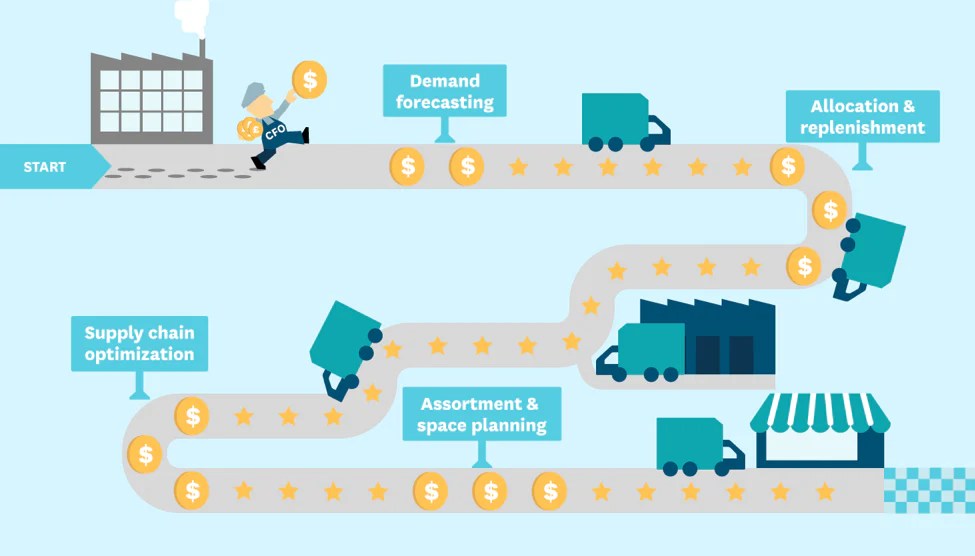
Accurate demand forecasting is the cornerstone of effective inventory optimization. Without reliable predictions of future demand, businesses risk either overstocking, leading to increased storage costs and potential obsolescence, or understocking, resulting in lost sales, dissatisfied customers, and damaged brand reputation. The accuracy of forecasting directly impacts the efficiency and profitability of the entire supply chain.Demand forecasting significantly influences inventory levels.
Precise forecasts allow businesses to maintain optimal stock levels, minimizing holding costs while ensuring sufficient inventory to meet customer demand. Conversely, inaccurate forecasts lead to either excessive inventory or stockouts, both of which negatively impact profitability and customer satisfaction. The goal is to strike a balance, holding enough inventory to meet expected demand without incurring excessive storage costs or risking product obsolescence.
Forecasting Methods and Their Applications
Various forecasting methods exist, each with strengths and weaknesses depending on the specific characteristics of the product and the supply chain. The choice of method depends on factors such as data availability, forecasting horizon, and the level of accuracy required.
- Simple Moving Average: This method averages demand over a specified period. It’s simple to use but less responsive to recent trends. Suitable for products with stable demand and minimal seasonality.
- Weighted Moving Average: Similar to the simple moving average, but assigns different weights to demand in different periods, giving more importance to recent data. Better suited for products with some trend or seasonality.
- Exponential Smoothing: This method assigns exponentially decreasing weights to older data, making it more responsive to recent trends. A popular choice for many products due to its balance between simplicity and responsiveness.
- ARIMA (Autoregressive Integrated Moving Average): A more sophisticated statistical method that models the underlying patterns in the data, including trends and seasonality. Suitable for products with complex demand patterns.
- Machine Learning Techniques: Advanced algorithms like neural networks and regression models can analyze vast datasets to generate highly accurate forecasts. Best suited for products with large amounts of historical data and complex demand patterns.
Hypothetical Forecasting Model: Athletic Footwear
Let’s consider a hypothetical forecasting model for a specific type of athletic footwear, a popular running shoe. Assumptions:
- Historical sales data for the past three years is available.
- Seasonality is a significant factor, with peak demand during the spring and fall.
- Marketing campaigns will be launched in the spring and fall, impacting demand.
- No major disruptive events (e.g., economic recession, supply chain disruptions) are anticipated.
Model: We’ll utilize an exponential smoothing model, incorporating seasonality factors derived from historical data. The model will incorporate adjustments based on planned marketing campaigns. Limitations: The model’s accuracy depends on the accuracy of the historical data and the validity of the assumptions. Unexpected events, such as a competitor launching a similar product, could significantly impact the forecast accuracy. Furthermore, the model assumes consistent consumer preferences and purchasing behavior.
Impact of Forecasting Errors
Inaccurate forecasts directly translate into increased inventory costs and potentially lower service levels. For instance, overestimating demand leads to excess inventory, resulting in higher storage costs, potential obsolescence, and write-offs. Conversely, underestimating demand results in stockouts, leading to lost sales, dissatisfied customers, and damage to brand reputation.Consider a scenario where a retailer overestimates demand for a new smartphone by 20%.
This leads to an excess inventory of 10,000 units, resulting in increased warehouse costs, potential markdowns to clear the stock, and ultimately, reduced profitability. Conversely, underestimating demand by 20% could mean missing out on 10,000 sales, resulting in lost revenue and potential loss of market share. The cost of these errors can be significant, emphasizing the critical role of accurate forecasting in inventory optimization.
Inventory Management Techniques
Effective inventory management is crucial for optimizing supply chains. Choosing the right technique significantly impacts profitability, customer satisfaction, and operational efficiency. Several methods exist, each with its strengths and weaknesses, making careful selection paramount. The suitability of a technique depends heavily on factors like product type, demand variability, production lead times, and the overall business strategy.
This section explores five common inventory management techniques, comparing their advantages and disadvantages and considering their application across various industries and product types. Understanding these techniques allows businesses to tailor their inventory strategies for optimal performance.
Just-in-Time (JIT) Inventory Management
JIT aims to minimize inventory holding costs by receiving materials only when needed for production. This system relies heavily on efficient production scheduling and strong supplier relationships. It is particularly suitable for industries with high-volume, standardized production, where demand is relatively predictable.
- Advantages: Reduced storage costs, minimized waste from obsolescence, improved cash flow, increased efficiency.
- Disadvantages: Requires highly reliable suppliers, susceptible to supply chain disruptions, increased risk of stockouts, demands precise production scheduling.
Economic Order Quantity (EOQ) Model
The EOQ model calculates the optimal order quantity that minimizes the total inventory costs, balancing ordering costs and holding costs. This is a classic inventory model that assumes constant demand and lead times. It is suitable for products with stable demand and relatively predictable lead times.
- Advantages: Simple to implement, provides a clear optimal order quantity, helps reduce total inventory costs.
- Disadvantages: Assumes constant demand and lead times, which may not be realistic in many situations, doesn’t account for quantity discounts, can be inflexible to changing demand.
Material Requirements Planning (MRP)
MRP is a production planning and inventory control system that uses a bill of materials and master production schedule to determine the quantities and timing of materials needed for production. It is especially beneficial for businesses manufacturing complex products with multiple components and long lead times.
- Advantages: Improved production scheduling, reduced lead times, better inventory control, minimized stockouts.
- Disadvantages: Requires accurate data on bill of materials and lead times, can be complex to implement and maintain, requires sophisticated software.
Kanban System
Kanban is a visual signaling system that uses cards or other visual cues to trigger the replenishment of inventory. It’s often used in lean manufacturing environments to manage the flow of materials between different stages of production. It is well-suited for industries with relatively stable demand and short lead times.
- Advantages: Simple and visual, improves workflow visibility, reduces waste, promotes continuous improvement.
- Disadvantages: Can be challenging to implement in complex environments, requires disciplined adherence to the system, may not be suitable for all product types.
ABC Analysis
ABC analysis categorizes inventory items based on their value and consumption. High-value (“A”) items receive close monitoring and control, while low-value (“C”) items receive less attention. This allows businesses to focus their inventory management efforts on the most critical items.
- Advantages: Prioritizes inventory management efforts, improves efficiency, reduces costs associated with managing low-value items.
- Disadvantages: Requires accurate data on item value and consumption, may not be suitable for all industries, requires periodic review and updates.
Selecting the Appropriate Technique
Selecting the right inventory management technique involves considering several factors. For example, a company producing high-volume, standardized products with predictable demand might benefit from JIT or EOQ. A company manufacturing complex products with long lead times might find MRP more suitable. Businesses with a diverse product portfolio might use ABC analysis to prioritize their inventory management efforts.
A company focused on lean manufacturing might implement a Kanban system. Ultimately, the optimal choice depends on a thorough assessment of the specific circumstances and business objectives.
Supply Chain Risk Management and Inventory
Effective inventory optimization is crucial for mitigating supply chain disruptions and building resilience against unforeseen events. By strategically managing inventory levels, businesses can reduce the impact of unexpected changes in demand, supplier issues, or geopolitical instability. This involves a proactive approach that anticipates potential risks and develops strategies to minimize their consequences.Inventory optimization acts as a buffer against supply chain volatility.
Maintaining optimal stock levels ensures sufficient inventory to meet customer demand even during periods of unexpected disruptions. This prevents stockouts, which can lead to lost sales, damaged customer relationships, and decreased profitability. Conversely, excessive inventory ties up capital and increases storage costs, creating further risks. The goal is to find the sweet spot – the right amount of inventory to balance risk mitigation with cost efficiency.
Mitigating Supply Chain Disruptions Through Inventory Optimization
Optimized inventory strategies directly reduce the vulnerability of supply chains to disruptions. For instance, implementing a multi-sourcing strategy, where multiple suppliers provide the same materials, decreases reliance on a single source and mitigates the risk of a single supplier failure impacting production. Similarly, strategically holding safety stock of critical components reduces the impact of delays or shortages from a single supplier.
Furthermore, accurate demand forecasting, integrated with real-time inventory tracking, allows businesses to proactively adjust inventory levels in response to potential disruptions, minimizing their overall impact. A company experiencing a sudden increase in demand due to a competitor’s product recall, for example, would be better positioned to meet that demand with pre-existing optimized inventory levels.
Inventory Management During High Demand or Shortages
Managing inventory during periods of high demand or supply shortages requires agile and adaptable strategies. During high demand, businesses can leverage techniques like expedited shipping, increased production capacity, or strategic allocation of inventory to prioritize key customers. Conversely, during supply shortages, strategies might include substituting materials, negotiating with suppliers for priority allocation, or implementing rationing to distribute limited inventory fairly among customers.
Real-time data analytics and robust communication across the supply chain are critical for effective decision-making in these volatile situations. For example, a clothing retailer anticipating a surge in demand during a holiday season could proactively increase its inventory levels of popular items several months in advance.
Determining Buffer Stocks and Safety Stock Levels
Buffer stocks and safety stocks are crucial components of inventory optimization, acting as a safeguard against demand variability and supply uncertainty. Safety stock levels are typically determined using statistical methods, considering factors such as lead time variability, demand variability, and desired service level. A common approach involves using a formula that incorporates the standard deviation of demand during lead time and a safety factor based on the desired service level.
For example, a formula might be:
Safety Stock = Z
- σL
- √(LT)
where Z is the Z-score corresponding to the desired service level, σ L is the standard deviation of demand during lead time, and LT is the lead time. Buffer stocks, on the other hand, are typically determined based on qualitative factors, such as anticipated disruptions or seasonal fluctuations. They represent a larger, more strategic reserve to withstand significant unforeseen events.
Best Practices for Building Resilient Supply Chains
Building resilient supply chains requires a holistic approach that integrates inventory optimization with other risk management strategies. This includes diversifying suppliers, establishing strong supplier relationships, implementing robust inventory tracking and management systems, and developing contingency plans for various scenarios. Regularly reviewing and updating the inventory optimization strategy is also essential to adapt to changing market conditions and potential risks.
Investing in advanced analytics and predictive modeling can significantly enhance the accuracy of demand forecasting and inventory planning, further strengthening supply chain resilience. For example, a company might use machine learning to predict future demand based on historical sales data, seasonality, and external factors such as economic indicators.
Optimizing inventory within a supply chain is not merely about reducing costs; it’s about building a resilient, responsive, and profitable operation. By strategically implementing the techniques and technologies discussed, businesses can achieve a delicate balance between meeting customer demand, minimizing waste, and maximizing efficiency. The future of inventory optimization lies in embracing innovative solutions and data-driven decision-making, paving the way for a more agile and sustainable supply chain ecosystem.
Query Resolution
What is the difference between safety stock and buffer stock?
Safety stock protects against unforeseen demand fluctuations, while buffer stock accounts for lead time variability in replenishment.
How can I choose the right inventory management software?
Consider your business size, industry, specific needs (e.g., forecasting capabilities, integration with existing systems), and budget when selecting software. A trial period is often beneficial.
What are some common pitfalls to avoid in inventory optimization?
Ignoring data-driven insights, failing to account for seasonality, implementing overly complex systems without proper training, and neglecting regular system reviews are all common mistakes.
How does inventory optimization impact customer satisfaction?
Optimized inventory ensures products are available when and where customers need them, leading to higher order fulfillment rates and improved customer loyalty.


