The intricate web of global commerce, once taken for granted, has been repeatedly exposed as vulnerable to unexpected disruptions. From natural disasters to geopolitical tensions and pandemics, supply chains face constant challenges impacting businesses, consumers, and global economies. Understanding the causes, consequences, and mitigation strategies for these disruptions is crucial for building a more resilient and sustainable future.
This exploration delves into the multifaceted nature of supply chain disruptions, examining their root causes, analyzing their far-reaching impacts, and exploring innovative solutions for enhanced resilience. We will investigate the role of technology in mitigating risks, fostering sustainability, and shaping the future of supply chain management in an increasingly complex and interconnected world.
Defining Supply Chain Disruptions
Supply chain disruptions are unplanned events that interfere with the flow of goods and services from origin to final consumption. These disruptions can range from minor inconveniences causing slight delays to major catastrophes that completely halt operations, leading to significant financial losses and reputational damage for businesses. Understanding the nature and impact of these disruptions is crucial for effective risk management and resilience building.Supply chain disruptions encompass a wide spectrum of events, each with unique characteristics and cascading effects.
They significantly impact various aspects of business operations, from production and logistics to sales and customer satisfaction. The severity of the impact depends on the nature of the disruption, its duration, and the company’s preparedness.
Types of Supply Chain Disruptions and Their Characteristics
Several factors can trigger supply chain disruptions. These disruptions are often categorized based on their root cause, enabling businesses to develop targeted mitigation strategies. For instance, natural disasters such as earthquakes, hurricanes, or floods can physically damage infrastructure, disrupting transportation networks and halting production. Geopolitical events, including trade wars, sanctions, and political instability, create uncertainty and volatility in global markets, impacting the availability of raw materials and the reliability of international shipping routes.
Pandemics, like the COVID-19 outbreak, drastically alter consumer demand, restrict labor availability, and disrupt global trade flows through border closures and quarantine measures. Each type of disruption possesses unique characteristics affecting the supply chain in different ways. For example, a pandemic might cause widespread labor shortages and increased demand for certain products, while a natural disaster could directly damage facilities and disrupt transportation links.
Cascading Effects of Disruptions
A key feature of supply chain disruptions is their tendency to create cascading effects. An initial problem at one point in the chain can trigger a series of downstream consequences. For example, a factory fire might initially halt production of a specific component. This shortage then leads to delays in assembling finished goods, causing production stoppages at other facilities reliant on that component.
The resulting backlog can further amplify the disruption, leading to missed delivery deadlines, lost sales, and potentially impacting the entire supply chain network. This domino effect can spread rapidly, impacting multiple businesses and sectors, underscoring the interconnectedness of global supply chains. Consider the 2011 Tohoku earthquake and tsunami in Japan: the damage to automotive parts manufacturing facilities triggered global shortages of vehicles and components, highlighting the far-reaching consequences of seemingly localized events.
The subsequent semiconductor chip shortage following the pandemic also demonstrates this effect, with the lack of chips impacting numerous industries from automotive manufacturing to consumer electronics.
Causes of Supply Chain Disruptions
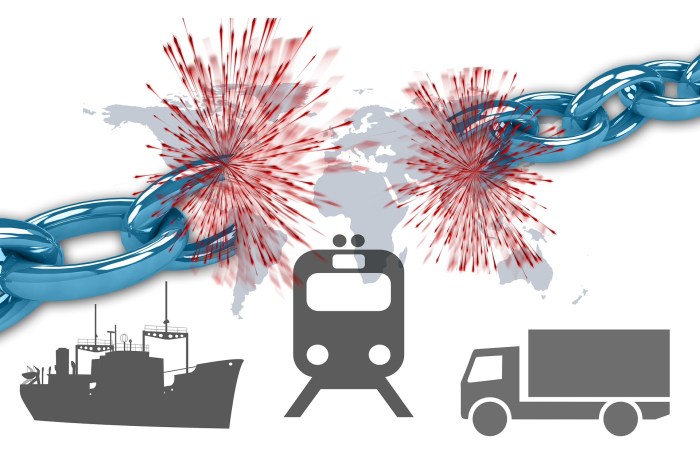
Supply chain disruptions are complex events stemming from a multitude of factors, both internal to a company and external to its operations. Understanding these causes is crucial for building resilient and adaptable supply chains capable of weathering unforeseen circumstances. The interconnected nature of global supply chains means that a disruption in one area can have cascading effects across entire industries.
Supply chain disruptions can be broadly categorized into internal and external factors. Internal factors are those within a company’s control, while external factors are largely beyond its direct influence. The interplay of these factors often leads to complex scenarios where multiple causes contribute to a single disruption.
Internal Causes of Supply Chain Disruptions
Internal factors often relate to a company’s management practices, operational capabilities, and internal processes. Inefficient inventory management, poor forecasting, and inadequate risk assessment are common culprits. A lack of technological integration across different parts of the supply chain can also lead to delays and inefficiencies. Furthermore, internal issues such as labor disputes, inadequate training, and poor communication can significantly hamper supply chain operations.
External Causes of Supply Chain Disruptions
External factors represent events outside a company’s control. These include natural disasters, geopolitical instability, pandemics, and economic downturns. Technological disruptions, such as cyberattacks and infrastructure failures, also fall under this category. Changes in government regulations, unexpected increases in raw material costs, and significant shifts in consumer demand can all trigger disruptions. Furthermore, supplier failures, port congestion, and transportation bottlenecks significantly impact supply chain fluidity.
Globalization and Supply Chain Vulnerability
Globalization has increased the efficiency and interconnectedness of global supply chains, allowing companies to access cheaper labor and resources. However, this interconnectedness also amplifies vulnerability. A disruption in one part of the globally dispersed supply chain can quickly spread to other parts, leading to widespread shortages and delays. The reliance on single-source suppliers or geographically concentrated manufacturing hubs increases this vulnerability significantly.
For example, the COVID-19 pandemic highlighted the fragility of globally integrated supply chains, with lockdowns and border closures causing widespread disruptions.
Impact of Disruption Causes on Various Industries
The impact of supply chain disruptions varies considerably across industries. Industries heavily reliant on just-in-time manufacturing, such as the automotive sector, are particularly vulnerable to disruptions in component supply. The food and beverage industry, with its perishable goods and complex logistics, faces unique challenges related to transportation and storage. The technology sector, with its reliance on specialized components and long lead times, can experience significant delays due to disruptions in semiconductor manufacturing.
Causes, Impacts, and Mitigation Strategies
| Cause | Industry Impact | Mitigation Strategy | Example |
|---|---|---|---|
| Natural Disaster (Earthquake) | Production halts, supply shortages, increased prices (e.g., electronics, construction) | Diversify sourcing, build redundant facilities, robust disaster recovery plans | 2011 Tohoku earthquake and tsunami impacting Japanese auto manufacturing |
| Pandemic (COVID-19) | Global shortages of essential goods, factory closures, port congestion (e.g., healthcare, retail) | Develop flexible supply chains, increase inventory levels, invest in digital technologies | Global mask shortages during the initial stages of the COVID-19 pandemic |
| Geopolitical Instability (Trade War) | Increased tariffs, reduced trade volumes, supply chain relocation (e.g., manufacturing, agriculture) | Diversify sourcing, negotiate favorable trade agreements, explore regionalization | US-China trade war impacting various industries |
| Cyberattack | Disruption of operations, data breaches, financial losses (e.g., technology, finance) | Invest in cybersecurity measures, implement robust data backup systems, develop incident response plans | NotPetya ransomware attack disrupting global shipping |
Supply Chain Sustainability and Resilience
Building resilient and sustainable supply chains is no longer a “nice-to-have” but a business imperative. The interconnectedness of global supply networks means that disruptions, whether environmental, social, or economic, can have cascading effects, impacting profitability and brand reputation. Integrating sustainability into supply chain management strengthens resilience by mitigating risks and fostering long-term stability.Sustainable practices and supply chain resilience are intrinsically linked.
A sustainable approach proactively addresses environmental and social concerns, reducing vulnerabilities to disruptions stemming from resource scarcity, climate change, and reputational damage. Resilience, in turn, ensures the continued flow of goods and services, allowing for the long-term implementation of sustainability initiatives. This symbiotic relationship fosters a more robust and ethically responsible supply chain.
Ethical Sourcing and Responsible Manufacturing’s Contribution to Long-Term Stability
Ethical sourcing and responsible manufacturing practices are fundamental pillars of a sustainable and resilient supply chain. By prioritizing fair labor practices, environmental protection, and the use of ethically sourced materials, companies minimize their exposure to risks associated with human rights violations, environmental damage, and supply chain disruptions caused by unethical practices. This proactive approach builds trust with consumers, strengthens relationships with suppliers, and enhances the long-term stability of the supply chain.
For instance, a company that ensures fair wages and safe working conditions in its manufacturing facilities is less likely to face labor strikes or boycotts, thereby reducing disruptions to its operations. Similarly, a company committed to sustainable sourcing of raw materials is less vulnerable to price volatility and supply shortages caused by environmental degradation or resource depletion.
Conflicts Between Cost Optimization and Sustainability Efforts
While the benefits of sustainability are undeniable, integrating these practices often presents challenges, particularly concerning cost optimization. Sustainable initiatives, such as implementing greener technologies, sourcing from ethical suppliers, or investing in employee training programs, often entail higher upfront costs compared to traditional, less sustainable practices. This can create conflicts for businesses prioritizing short-term cost reduction over long-term sustainability and resilience.
For example, choosing a cheaper supplier that may compromise on labor standards or environmental regulations can lead to short-term cost savings but expose the company to risks such as reputational damage, legal penalties, and supply chain disruptions. However, a holistic approach recognizes that the long-term costs of unsustainable practices often outweigh the initial savings.
Examples of Successful Sustainability Integration in Supply Chain Strategies
Several companies have successfully integrated sustainability into their supply chain strategies, demonstrating that it is possible to achieve both profitability and resilience. Patagonia, for example, has long been a leader in sustainable apparel manufacturing, prioritizing fair labor practices, using recycled materials, and minimizing its environmental footprint. Their commitment to sustainability has not only enhanced their brand reputation but also contributed to the long-term stability of their supply chain.
Similarly, Unilever has implemented a Sustainable Living Plan that aims to reduce its environmental impact and improve the livelihoods of its suppliers. Their efforts have resulted in cost savings, improved efficiency, and increased resilience to supply chain disruptions. These examples illustrate that sustainability is not a barrier to profitability but rather a driver of long-term value creation and supply chain resilience.
Navigating the complexities of supply chain disruptions requires a proactive and multi-faceted approach. By understanding the diverse causes, analyzing their cascading effects, and implementing robust mitigation strategies, businesses can enhance their resilience and prepare for future uncertainties. Embracing technological advancements, promoting sustainable practices, and fostering collaboration across the supply chain are key to building a more secure and adaptable global trading system.
Quick FAQs
What is the difference between a disruption and a risk in a supply chain?
A supply chain
-risk* is a potential threat that
-could* disrupt operations. A supply chain
-disruption* is an actual event that
-has* negatively impacted operations.
How can small businesses protect themselves from supply chain disruptions?
Small businesses can diversify their suppliers, build strong relationships with key partners, maintain sufficient safety stock, and explore technology solutions for improved visibility and responsiveness.
What is the role of insurance in mitigating supply chain disruptions?
Insurance can help cover some of the financial losses associated with disruptions, such as lost revenue, damaged goods, or business interruption. However, it’s crucial to have a comprehensive risk management plan in place beyond insurance.
Are there any international organizations dedicated to addressing supply chain disruptions?
Yes, organizations like the World Trade Organization (WTO) and the Organisation for Economic Co-operation and Development (OECD) play a role in promoting global trade and addressing challenges impacting supply chains. Many industry-specific organizations also contribute to resilience efforts.


