
Manufacturing’s intricate dance relies heavily on a well-oiled supply chain. From raw materials to finished goods, the journey is a complex web of sourcing, production, and distribution. Understanding the dynamics of this chain is crucial for efficiency, profitability, and resilience in today’s volatile global market. This exploration delves into the key aspects of supply chain management within the manufacturing sector, examining its challenges, opportunities, and future trends.
This overview will dissect the components of a typical manufacturing supply chain, highlighting key differences across various industries. We will investigate the transformative impact of technology, the persistent challenges posed by geopolitical instability and risk, and the strategies employed to enhance efficiency and sustainability. Further, we will examine the crucial roles of predictive analytics, blockchain, and the Internet of Things (IoT) in modernizing and optimizing these complex systems.
Sustainability in Manufacturing Supply Chains
Manufacturing supply chains exert a significant environmental impact, encompassing resource extraction, production processes, transportation, and end-of-life management. The sheer scale of global manufacturing contributes substantially to greenhouse gas emissions, water pollution, deforestation, and waste generation. Understanding and mitigating these impacts is crucial for the long-term viability and ethical operation of manufacturing businesses.
Environmental Impact of Manufacturing Supply Chains
The environmental footprint of manufacturing supply chains is multifaceted. Upstream activities, such as raw material extraction and processing, often lead to habitat destruction, pollution of water sources, and significant energy consumption. Manufacturing processes themselves generate emissions, waste, and byproducts, depending on the industry and technologies employed. Transportation, a vital link in the supply chain, contributes significantly to greenhouse gas emissions, particularly for long-distance shipments.
Finally, the disposal or recycling of end-of-life products presents further environmental challenges, with improper disposal leading to landfill accumulation and potential pollution. For example, the electronics industry generates a massive amount of e-waste, containing hazardous materials that require careful management to prevent environmental contamination. Similarly, the fashion industry’s reliance on resource-intensive materials and fast-fashion cycles contributes significantly to textile waste and pollution.
Sustainable Sourcing Practices in Manufacturing
Sustainable sourcing aims to minimize the environmental and social impacts associated with procuring raw materials and components. This involves several key practices. One crucial aspect is selecting suppliers committed to environmental stewardship and ethical labor practices. This can involve rigorous supplier audits and certifications, such as those offered by organizations like the Forest Stewardship Council (FSC) for timber products or Fairtrade for agricultural commodities.
Another important practice is prioritizing recycled or renewable materials. Using recycled aluminum in beverage cans, for instance, significantly reduces the energy required compared to using virgin aluminum. Similarly, incorporating bio-based plastics derived from renewable sources can help to reduce reliance on fossil fuels. Furthermore, optimizing transportation routes and utilizing more fuel-efficient modes of transport can reduce the carbon footprint of the supply chain.
Finally, adopting closed-loop systems where waste materials are recovered and reused within the production process contributes to a more sustainable approach.
Hypothetical Circular Economy Model in a Manufacturing Supply Chain
Imagine a hypothetical manufacturer of furniture using a circular economy model. The company sources sustainably harvested timber certified by the FSC, using local suppliers to minimize transportation distances. Manufacturing processes minimize waste through careful design and efficient production techniques. Leftover wood scraps are used to create smaller products or are chipped for biomass energy. The company designs its furniture for durability and repairability, offering repair services and spare parts to extend product lifecycles.
At the end of a product’s life, the company takes back the furniture, dismantling it and recovering valuable materials for reuse or recycling. Metals are recycled, wood is used for biomass energy or composted, and textiles are reused or recycled. This closed-loop system minimizes waste, reduces reliance on virgin materials, and conserves resources. This model, while hypothetical, reflects the principles of a circular economy, aiming for a more sustainable and resource-efficient manufacturing process.
Companies like Interface, a flooring manufacturer, have already implemented similar circular economy strategies, demonstrating the feasibility of this approach.
The Role of Technology
Technology is rapidly transforming manufacturing supply chains, offering unprecedented opportunities for increased efficiency, transparency, and sustainability. The integration of advanced technologies like blockchain and the Internet of Things (IoT) is revolutionizing how businesses manage their supply networks, leading to significant improvements in traceability, responsiveness, and overall performance. This section explores the impact of key technologies on modern manufacturing supply chains.
Blockchain Technology and Supply Chain Transparency
Blockchain’s decentralized and immutable nature makes it ideally suited for enhancing transparency within supply chains. By recording all transactions and movements of goods on a shared, secure ledger, blockchain provides a verifiable audit trail from raw material sourcing to final product delivery. This eliminates the possibility of data manipulation and significantly reduces the risk of counterfeiting. For example, a food manufacturer can use blockchain to track the origin of ingredients, ensuring that consumers have access to accurate information about the product’s journey.
This enhanced transparency builds trust with consumers and facilitates better compliance with regulatory requirements. Furthermore, blockchain can streamline processes such as customs clearance and payment processing, reducing delays and costs.
Internet of Things (IoT) and Real-Time Monitoring and Control
The Internet of Things (IoT) connects physical devices and sensors within the supply chain, enabling real-time monitoring and control of various aspects of the manufacturing process. Sensors embedded in products, vehicles, and machinery provide continuous data streams on location, temperature, humidity, and other crucial parameters. This data can be analyzed to optimize inventory management, predict potential disruptions, and improve logistics planning.
For instance, a logistics company can use IoT sensors to track the location and condition of goods in transit, ensuring timely delivery and minimizing the risk of damage or spoilage. Real-time data also enables proactive maintenance of equipment, reducing downtime and improving overall productivity.
Comparison of Supply Chain Management Software Solutions
Several software solutions cater to various needs within supply chain management. These solutions differ in functionality, scalability, and cost. Enterprise Resource Planning (ERP) systems, such as SAP and Oracle, offer comprehensive solutions integrating various business functions, including supply chain management. However, they can be expensive and complex to implement. Specialized Supply Chain Management (SCM) software, like Blue Yonder and JDA, focus specifically on optimizing supply chain processes, offering features like demand planning, inventory optimization, and transportation management.
Cloud-based solutions offer flexibility and scalability, while on-premise solutions provide greater control over data security. The choice of software depends on the specific needs and resources of the manufacturing company. Factors to consider include the size and complexity of the supply chain, budget constraints, and integration with existing systems.
Supply Chain (General Discussion)
A supply chain encompasses the entire network of processes and entities involved in creating and delivering a product or service to the end consumer. It starts from the sourcing of raw materials and extends through manufacturing, distribution, and ultimately, retail. Understanding and optimizing this complex network is crucial for business success, impacting everything from profitability and efficiency to customer satisfaction and brand reputation.The effectiveness of a supply chain directly influences a company’s ability to compete.
A well-managed supply chain ensures timely delivery of high-quality goods at competitive prices, while a poorly managed one can lead to stockouts, delays, increased costs, and damaged customer relationships. Therefore, a robust and resilient supply chain is a strategic advantage in today’s dynamic market.
Different Supply Chain Models
Various supply chain models cater to different business needs and market conditions. The choice of model depends on factors such as product characteristics, customer demand, and competitive landscape. Two prominent examples are agile and lean supply chains. Agile supply chains prioritize flexibility and responsiveness to rapidly changing customer demands, often utilizing techniques like postponement and mass customization. Lean supply chains, conversely, focus on eliminating waste and maximizing efficiency throughout the entire process, employing tools like just-in-time inventory management and kaizen (continuous improvement).
A company might even adopt a hybrid approach, combining elements of both models to leverage their respective strengths. For instance, a manufacturer of customized apparel might employ an agile model for order fulfillment while using lean principles for fabric sourcing and production.
Globalization’s Impact on Supply Chains
Globalization has profoundly reshaped supply chains, presenting both opportunities and challenges. The increased interconnectedness of global markets has enabled businesses to access a wider range of resources, suppliers, and customers. However, this interconnectedness also introduces complexities and risks.
- Increased Efficiency and Cost Savings: Access to lower-cost labor and raw materials in different regions can significantly reduce production costs.
- Expanded Market Reach: Businesses can easily reach a global customer base, increasing sales and revenue potential.
- Greater Supply Chain Complexity: Managing geographically dispersed operations and coordinating logistics across multiple countries becomes significantly more challenging.
- Increased Risk of Disruptions: Geopolitical instability, natural disasters, and pandemics can severely disrupt global supply chains, leading to delays and shortages.
- Supply Chain Vulnerability: Over-reliance on single suppliers or regions increases vulnerability to disruptions.
- Increased Regulatory and Compliance Challenges: Navigating diverse regulations and trade policies across different countries adds complexity and cost.
Future Trends in Manufacturing Supply Chains
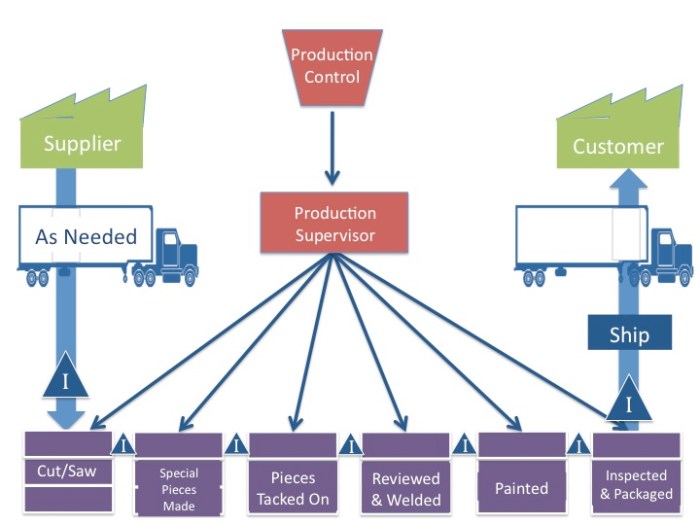
The manufacturing landscape is undergoing a rapid transformation, driven by technological advancements and evolving consumer demands. Understanding and adapting to emerging trends is crucial for businesses to maintain competitiveness and resilience in the global marketplace. This section will explore key trends shaping the future of manufacturing supply chains.
Three Emerging Trends Shaping the Future of Manufacturing Supply Chains
Several interconnected factors are reshaping how goods are produced and delivered. These trends necessitate a proactive approach to adaptation and innovation within manufacturing supply chains.
- Increased Supply Chain Visibility and Transparency: The demand for greater transparency across the entire supply chain is growing. Consumers are increasingly interested in the ethical and environmental impact of the products they buy, demanding traceability and accountability from manufacturers. Blockchain technology is playing a key role in providing this enhanced visibility, enabling the tracking of goods from origin to consumer, ensuring authenticity and facilitating efficient recall processes in case of defects or contamination.
- Sustainable and Circular Supply Chains: Environmental concerns are driving a shift towards more sustainable manufacturing practices. Companies are increasingly focusing on reducing their carbon footprint, minimizing waste, and using eco-friendly materials. This involves implementing circular economy principles, such as designing products for recyclability, reusing components, and extending product lifecycles. The focus is on minimizing environmental impact throughout the entire supply chain, from raw material sourcing to end-of-life product management.
- Hyper-Personalization and Mass Customization: Consumers are increasingly demanding personalized products and services. Advancements in manufacturing technologies, such as 3D printing and additive manufacturing, are enabling mass customization, allowing companies to produce customized products on a large scale at competitive prices. This trend necessitates more agile and flexible supply chains capable of responding quickly to changing consumer preferences and demands.
The Impact of Automation and Robotics on Manufacturing Processes
Automation and robotics are revolutionizing manufacturing processes, enhancing efficiency, productivity, and product quality. The integration of robots and automated systems is not merely about replacing human labor; it’s about augmenting human capabilities and creating a more efficient and safer work environment.The use of robots in assembly lines, for example, allows for increased precision, speed, and consistency in manufacturing processes.
Automated guided vehicles (AGVs) optimize material handling and logistics within factories, reducing transportation times and minimizing human error. Furthermore, collaborative robots (cobots) are designed to work alongside human workers, assisting with tasks that are repetitive, dangerous, or require high precision. This collaboration allows for increased productivity and improved worker safety. For example, Tesla’s Gigafactory utilizes extensive automation and robotics in its electric vehicle production, showcasing the potential for significantly increased production capacity and efficiency.
The Increasing Importance of Data Analytics and Artificial Intelligence in Supply Chain Optimization
Data analytics and artificial intelligence (AI) are transforming supply chain management by enabling more informed decision-making and improved operational efficiency. The vast amounts of data generated throughout the supply chain, from production to delivery, can be analyzed to identify patterns, predict disruptions, and optimize processes.AI-powered predictive analytics can forecast demand fluctuations, optimize inventory levels, and proactively identify potential supply chain disruptions, such as weather events or geopolitical instability.
Machine learning algorithms can analyze historical data to identify optimal transportation routes, improve logistics planning, and reduce transportation costs. For instance, Amazon utilizes sophisticated AI algorithms to predict customer demand, optimize its vast logistics network, and provide efficient delivery services. This demonstrates the power of data-driven decision-making in optimizing supply chain operations and enhancing customer satisfaction.
In conclusion, the manufacturing supply chain is a dynamic and evolving ecosystem demanding constant adaptation and innovation. Successfully navigating the complexities of global sourcing, production, and distribution requires a proactive approach encompassing robust risk management, technological integration, and a commitment to sustainable practices. By embracing emerging technologies and fostering collaborative relationships, manufacturers can build resilient, efficient, and ultimately, more profitable supply chains that thrive in an increasingly competitive and interconnected world.
Question & Answer Hub
What is the bullwhip effect in a manufacturing supply chain?
The bullwhip effect describes demand variability amplification as you move upstream in the supply chain. Small changes in consumer demand can lead to exponentially larger fluctuations in orders placed further back, causing inefficiencies and increased inventory costs.
How can a company improve its supplier relationships?
Improved supplier relationships involve open communication, collaborative planning, fair pricing, and mutual trust. Regular meetings, shared performance metrics, and joint problem-solving initiatives are key components.
What are some examples of supply chain disruptions beyond geopolitical instability?
Disruptions can stem from natural disasters, pandemics, labor strikes, cybersecurity breaches, and unexpected increases in raw material costs or transportation fees.
What role does ethical sourcing play in modern manufacturing?
Ethical sourcing ensures fair labor practices, environmental protection, and responsible resource management throughout the supply chain. It enhances brand reputation and fosters consumer trust.


